WAI
Bringing back Ahupua’a based water management to
Kalihiwai and Kīlauea
Problem
Groundwater is becoming the only remaining water source. With the recent decommissioning of the Kalihiwai Reservoir, our ahupuaʻa has lost a critical surface water supply and is now primarily reliant on groundwater.
Water demand is set to increase. Kīlauea Town expansion, the development of Nāmāhana School, and a growing agricultural sector including expanded production at our Kīlauea Community Agricultural Center which is already under a limited water use.
Rising environmental stress. More extreme rainfall, longer dry periods, fire risks and increased flooding affect groundwater recharge and availability, increasing uncertainty for water security.
Existing water plans are outdated. Current plans do not adequately account for increased demand, climate change, or emergency response needs, and existing frameworks for understanding groundwater are largely theoretical instead of data-based, applicable to the specific local watershed.
Drilling dry wells. While reports suggest the area is producing normally, neighbors are drilling dry wells. This could reflect limited understanding of our aquifer, potential under-reporting of pumping, and possibly early indications that groundwater may be under pressure.
Solution
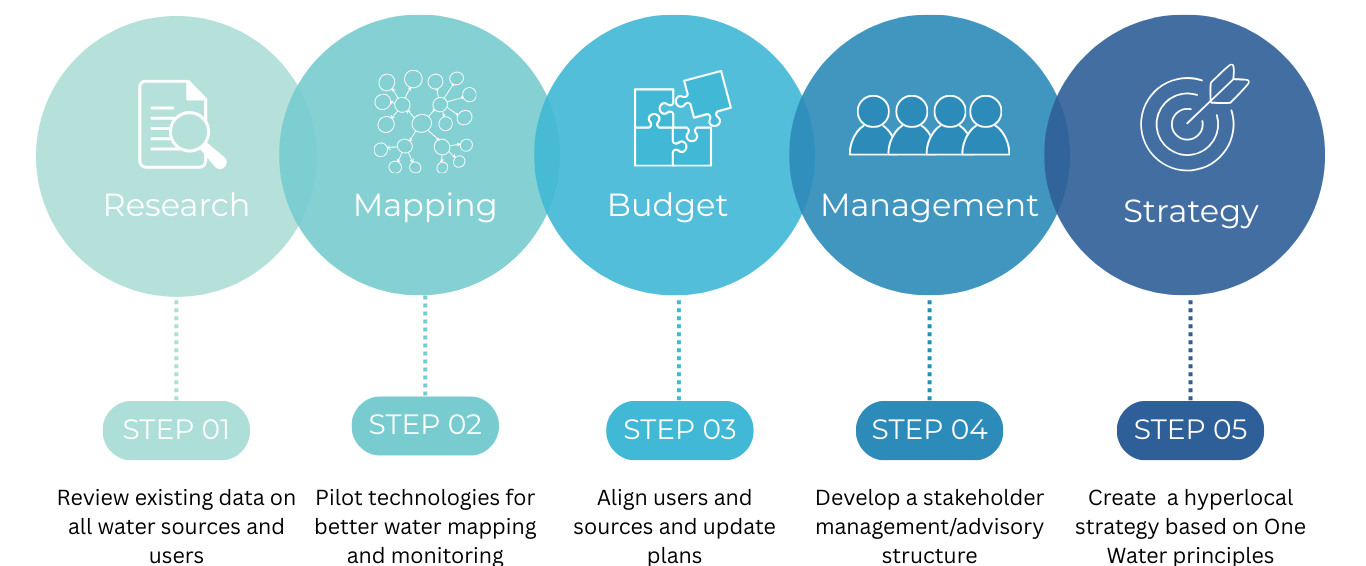
The Namahana Watersmart Strategy
Projects
-
We hold biannual community meetings to keep residents informed about ongoing water projects, share updates on planning and progress, and gather local input. These meetings provide a space for questions, feedback, and collaboration, ensuring that decisions reflect community needs and priorities while keeping everyone connected to the health and future of our watershed.
Meeting Slides:
H2 2025 - June - Slides
H1 2026 - TBD
H2 2026 - TBD
H1 2027 - TBD
H2 2027 - TBD
H1 2028 - TBD
-
We’re piloting non-invasive new-to-Hawaii technologies:
Airborne electromagnetic (AEM) surveys to create a 3D map of aquifers beneath our feet.
A helicopter-mounted scanner sends electromagnetic signals underground
Measures how different materials, rock, soil, or water, resist electric flow
Combined with well data, it reveals where groundwater is stored
This non-invasive method helps avoid “dry wells” and guesswork.
With more accurate data, we can better protect and manage
groundwater, especially if groundwater becomes our only source.Better data = smarter, long-term water decisions.
-
Strategy development in process.
-
Built around 1920 to support sugarcane irrigation and provide water to Kilauea town, Kalihiwai Reservoir originally held 428 acre-feet of water. After the plantation closed in the 1970s, the reservoir shifted from sugarcane use to provide water to the ag lots of the KRCA subdivision as well as supporting habitat for 5 native water birds. Following stricter dam safety laws enacted after the 2006 Ka Loko Dam failure, maintenance and liability received even greater scrutiny. Kalihiwai Reservoir was deemed high hazard by Dam Safety and required remediation. Between 2010 and 2021 the then owners, the Kalihiwai Ridge Community Association (KRCA) board and the two easement holders pursued plans for remediation however by the end of 2021 new costs estimates far exceeded initial projections. Over time changes in ownership with the death of Bill Porter and sale of Common Grounds, the priorities of the KRCA board shifted from restoration to decommissioning with the new high costs, concerns over liability and, a broader evolution in values and vision for the reservoir.
AHK’s History with Kalihiwai Reservoir
Reservoir overflow agreement established with Porter Irrigation: AHK established an agreement with Porter Irrigation to use reservoir overflow (1.5 million gallons/day) for irrigation.
When Kalihiwai Ridge Community Association (KRCA) pivoted toward reservoir decommissioning: After 10 years of investment into remediation plans, the final estimated costs were deemed too expensive. AHK engaged stakeholders to revisit remediation and identify what it would take to realign with the original shared vision of restoring key water infrastructure for Kilauea and for use at KCAC.
Ultimately the decision to decommission was finalized: November 14 2025 KRCA went before DLNR to receive their final permit for the removal of Kalihiwai Reservoir. This was approved by the board. View permit request