
A Community Hub for Evolving Solutions to the Coconut Rhinoceros Beetle
This page is designed to put together all the latest information. We’re not experts, but we’re staying up to date with the latest developments and want to support our community in making informed, thoughtful decisions. We encourage you to check the original sources to see what’s right for you. We also excited to share that we can directly connect you with solutions partnering with other organizations to create a localized response effort for North and East Kaua’i.
Why is neighborhood response important?
CRB Doesn’t Stop at Property Lines
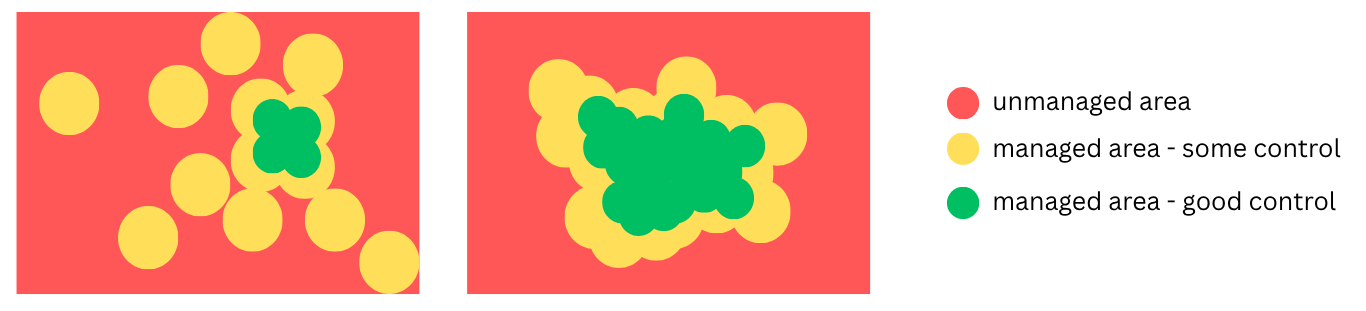
One unmanaged yard can put the whole block at risk. When neighbors act together; covering compost, checking palms, reporting sightings, we see real progress. Talk to your neighbors and build a cluster of response.
Tracking the spread
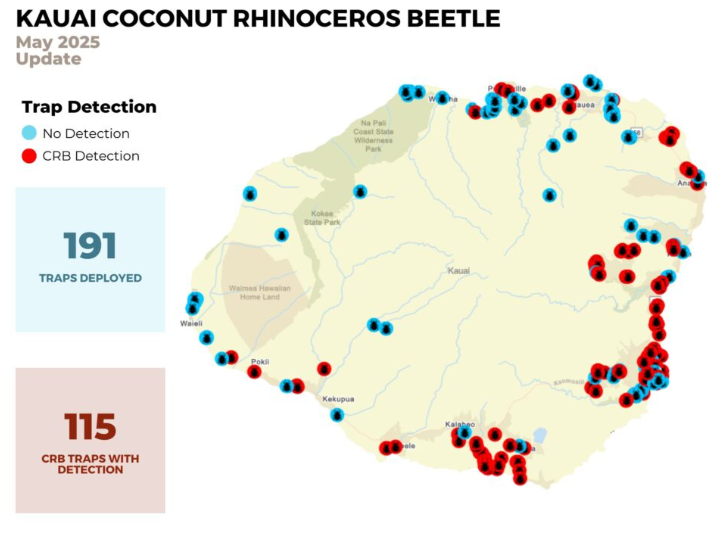
Courtesy of Kauai Invasive Species Committee
Updated map coming soon...
CRB has been detected in Kaua’i from Haena to Waimea.
Live maps have been challenging to implement on island due to privacy and stigma. We are working with other community groups to put together a consolidated map
In 2025:
58 reports to 643Pest, majority in Wailua and Moloa’a and some in Eleele, Poipu, Anahola, Kokee
Find solutions
Managing CRB isn’t a one-and-done effort. It takes ongoing collective community action. See below for solutions or connect with our response team to review your site.
-
Look for signs: Bore holes on palms, leaf cuts, or damage in compost/green waste. (Ref: CRB Hawaii, KISC video at 12:35)
Timing matters: Visible damage often appears weeks–months after feeding starts - report immediately and inspect nearby green waste.
Monitoring piles: Dig through compost or mulch every 4 months to find and remove large larvae.(CTAHR, Page 2) -
Report here to 634PEST to help the state track infestations
Report here to AHK to get connected with Kaua‘i response teams; community sifters, dog sniffers, steaming services, pest control, and real on-island solutions.
Then tell your neighbors! Early action and open communication are key. -
Green wastes includes: dead trees, stumps, mulch, wood chips, compost piles.
Properly Manage Materials
Chip incoming CRB host materials within 48 hours.
Properly compost CRB host materials by heating piles to at least 131 degrees Fahrenheit.
Monitor finished materials at least every 4 months (visual check during turnover). Once compost cools to around 110 degrees Fahrenheit, it can be infested and is a good breeding material for CRB. CRB stays in piles for 5-6 months
Do not stockpile or keep a mound of CRB host material. Routinely distribute around plants.
Note thinly spreading materials have reportedly not been affective
Netting piles: Highly effective - netting mulch piles traps up to 25× more CRB than pheromone traps. (Details on netting: CTAHR page 4 - 5)
Prevent the Spread
Utilize or process CRB host materials that are already on-site for end use, eliminating the need to move potentially infested materials.
Safeguard CRB host materials that have been properly composted or treated in completely sealed containers that prevent CRB entry. Containers made of metal, concrete or glass are acceptable. CRB can chew through many plastics.
Ensure CRB host materials are still at acceptable temperatures or are subjected to effective treatment before being transported off site.
If you receive CRB host materials, ensure it comes from a reputable source that follows CRB Best Management Practices. Ask suppliers to provide documentation of their CRB prevention efforts.
If you find CRB effective strategies:
Chipping and/or grinding
Hot compost every 4 months
If above strategies not feasible then:
Incineration/Biochar: Kills CRB; biochar preferred for soil benefits and low
Heat/Steam treatment: 100% natural and effective (Mr Lance’s Steam)
References: CRB Response, County of Hawaii Compliance Order
-
Net crowns: Use ½” monofilament netting around the crown - keep it fluffy and adjust monthly. Effective but labor-intensive.
Available online from Lee Fisher Fishing Supply,Memphis Net & Twine
References: CTAHR page 4 - 5
Keep palms healthy: fertilize appropriately and avoid over-pruning. Observations from response teams and community report that untrimmed trees often resist CRB better.
References: Daniel Anthony,Aloha Organic, untrimmed V trimmed by Brown Cannon
Essential oil spray: A non-toxic preventative solution. Per 1 gallon spray solution:3oz Basil Oil,
1oz Clove Oil,
1oz Neem Oil,
60 drops of Premium Oleoresin Capsicum Extract,
1 tsp Hi-Yield spreader sticker (or sub with 1 tsp castile soap + 1-2 Tbsp coconut oil)
References: CTAHR trials p38-44, Alberto Ricordi & Brown Cannon notes, CTAHR Paper, latest recipe informed by Brown Cannon to CRB Action
DIY Sprayer: Use a DIY sprayer for tall palms to reduce repeated climbs.
Instructions: Save Hawaiian Palms guide
-
Chemical Controls (Use with Caution)
Recommend reading Hawaii Invasive Species Council (HISC Chemical for CRB)
Important: Community sifters and dog groups won’t visit sites with recent pesticide use due to health risks
Crown Spray (e.g., pyrethrin-based sprays)
Short-term option but does allow you to continue to eat coconuts . Washes off easily but useful for non-accessible large groves or when you cannot reach trees to remove fruits and flowers. Drones can assist (Only permitted drone company on Maui - Aloha Aina Drones).Reference: CRB Response Chemical treatments, KISC CRB training video
Trunk Injection (Imidacloprid and Acephate)
Use only in known infected areas. Short-term studies show low leaching risk if flowers/fruits are removed. Avoid repeated use due to potential long-term ecosystem impacts. Trees may still show CRB damage, but injection combined with collective action can reduce CRB populations.
Reference: CRB Response Chemical treatments Brown Cannon’s thoughts on injectingSoil Drench (Imidacloprid)
Not yet proven effective (no formal testing). Same trimming precautions apply. Very risky of environmental leaching especially during rainy season or in places close to bodies of water.Reference: CTAHR CRB Overview pg. 9
-
Traps are one of the most important tools for monitoring and reducing CRB populations. They help detect beetle presence early and can capture adults to slow spread in affected areas.
Some great DIY traps:
Where to buy all the resources
Key trap elements:
Netting (contact CRB Action Kauai for access to free resources)
Mulch (CRB are 25x more likely to go to mulch than a pheromone CRB Response)
Pheromone (study)
UV light (study)
A Guam study found netting mulch piles caught 25x more CRB adults than pheromone traps and other trapping methods (Moore et al. 2014).
CRB Responses statement showing lack of evidence that traps attract CRB to new areas